


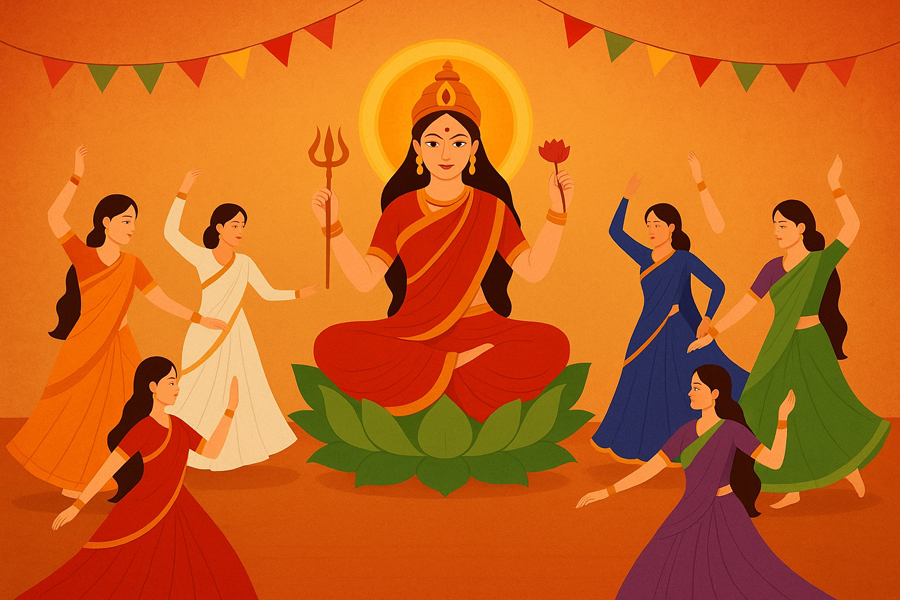
Navratri is a vibrant nine-day Hindu festival that celebrates the divine feminine energy through the worship of Goddess Durga’s nine forms. Each day is associated with a specific color that reflects the goddess’s attributes and sets the tone for rituals, prayers, and celebrations. Wearing the designated color not only enhances spiritual connection but also adds symbolic meaning to your attire.
In 2025, Sharadiya Navratri begins at 1:23 AM on September 22nd and ends at 2:55 AM on September 23rd. This time, Goddess Durga will arrive riding an elephant, which is extremely auspicious. According to the Udaya Tithi, Sharadiya Navratri begins on September 22nd, 2025, and will conclude with Dussehra and Durga Visarjan on October 2nd, with each day’s color determined by the weekday it falls on. Here’s your complete guide to what color to wear each day of Navratri 2025 and why it matters.
Day 1-Orange (22 September, Goddess Shailaputri)
Orange symbolizes energy, enthusiasm, and warmth. On the first day of Navratri, devotees worship Goddess Shailaputri, the embodiment of strength and nature. Wearing orange reflects vitality and a fresh start, aligning with the goddess’s grounding presence. It’s a color that ignites positivity and sets a vibrant tone for the festival. Whether you choose a saffron saree or a bright orange kurta, this shade radiates confidence and devotion. Pair it with gold jewelry or marigold flowers to enhance the festive spirit. Orange also represents courage and transformation, making it ideal for invoking divine blessings on the opening day.
Day 2-White (23 September, Goddess Brahmacharini)
White stands for purity, peace, and spiritual clarity. On the second day, Goddess Brahmacharini is worshipped-she represents penance, wisdom, and devotion. Wearing white helps cultivate calmness and inner focus. It’s a color that promotes serenity and aligns with the goddess’s meditative nature. A white outfit, whether traditional or modern, brings elegance and grace to your Navratri look. You can accessorize with pearls or jasmine flowers to amplify the tranquil vibe. White also symbolizes truth and simplicity, making it perfect for a day dedicated to spiritual growth and self-discipline.
Day 3-Red (24 September, Goddess Chandraghanta)
Red is the color of passion, strength, and protection. On the third day, devotees honor Goddess Chandraghanta, known for her fierce yet compassionate nature. Wearing red invokes courage and determination. It’s a bold color that energizes and empowers, ideal for rituals and celebrations. A red saree or lehenga paired with gold accents creates a striking festive look. Red also symbolizes love and auspiciousness, making it perfect for connecting with the goddess’s warrior spirit. This day encourages you to embrace your inner strength and face challenges with confidence.
Day 4-Royal Blue (25 September, Goddess Kushmanda)
Royal blue represents depth, stability, and divine wisdom. On the fourth day, Goddess Kushmanda is worshipped-she is believed to have created the universe with her radiant smile. Wearing royal blue reflects clarity and spiritual insight. It’s a majestic color that adds elegance to your Navratri attire. Choose a royal blue outfit with silver or gold embroidery to honor the goddess’s creative power. This color also promotes mental focus and emotional balance, making it ideal for meditation and prayer. Royal blue connects you to cosmic energy and encourages inner expansion.
Day 5-Yellow (26 September, Goddess Skandamata)
Yellow symbolizes joy, intellect, and prosperity. On the fifth day, devotees worship Goddess Skandamata, the nurturing mother of Lord Kartikeya. Wearing yellow reflects warmth and positivity. It’s a cheerful color that uplifts the spirit and fosters optimism. A yellow saree or salwar suit paired with floral accessories adds brightness to your celebration. Yellow also signifies learning and clarity, making it perfect for honoring the goddess’s maternal wisdom. This day encourages compassion and growth, both spiritually and emotionally.
Day 6-Green (27 September, Goddess Katyayani)
Green stands for renewal, harmony, and courage. On the sixth day, Goddess Katyayani is worshipped-she is a fierce form of Durga who destroys evil. Wearing green reflects balance and strength. It’s a refreshing color that connects you to nature and promotes healing. A green outfit with earthy tones or leafy motifs enhances your festive look. Green also symbolizes fertility and abundance, making it ideal for invoking the goddess’s protective and empowering energy. This day inspires action and resilience.
Day 7-Grey (28 September, Goddess Kalaratri)
Grey represents neutrality, wisdom, and introspection. On the seventh day, devotees honor Goddess Kalaratri, the destroyer of darkness and fear. Wearing grey reflects inner strength and calmness. It’s a subtle yet powerful color that encourages reflection and emotional stability. A grey saree or kurta with minimal embellishments creates a dignified look. Grey also symbolizes detachment and clarity, making it perfect for a day focused on overcoming negativity and embracing transformation. This day invites you to face your fears and emerge stronger.
Day 8-Purple (29 September, Goddess Mahagauri)
Purple stands for devotion, creativity, and spiritual awakening. On the eighth day, Goddess Mahagauri is worshipped-she embodies purity and grace. Wearing purple reflects divine connection and inner peace. It’s a regal color that adds charm and depth to your Navratri ensemble. A purple outfit with gold accents or gemstone jewelry enhances the sacred ambiance. Purple also promotes intuition and emotional healing, making it ideal for honoring the goddess’s gentle and benevolent nature. This day encourages self-reflection and gratitude.
Day 9-Peacock Green (30 September, Goddess Siddhidatri)
Peacock green symbolizes success, wisdom, and fulfillment. On the final day, devotees worship Goddess Siddhidatri, the granter of supernatural powers and enlightenment. Wearing peacock green reflects spiritual maturity and abundance. It’s a rich and vibrant color that signifies transformation and divine blessings. A peacock green saree or lehenga with intricate detailing adds grandeur to your closing celebration. This color also encourages balance and clarity, making it perfect for concluding Navratri with reverence and joy. Embrace this shade to honor the goddess’s power and grace.
ALSO READ-Discover the Relationships That Truly Matter
Disclaimer: The articles, videos, and news published and shared on Theconnect24.com covering topics such as religion, astrology, health, yoga, history, mythology, and others are intended solely for general informational purposes. These materials are sourced from various references, and Theconnect24.com does not guarantee or verify their accuracy, completeness, or authenticity. Viewers are strongly advised to seek guidance from qualified experts or specialists before practicing, following, or experimenting with any information related to astrology, health, or similar subjects. This content is presented purely for the interest of viewers and does not carry any scientific validation or evidence.
 Loading ...